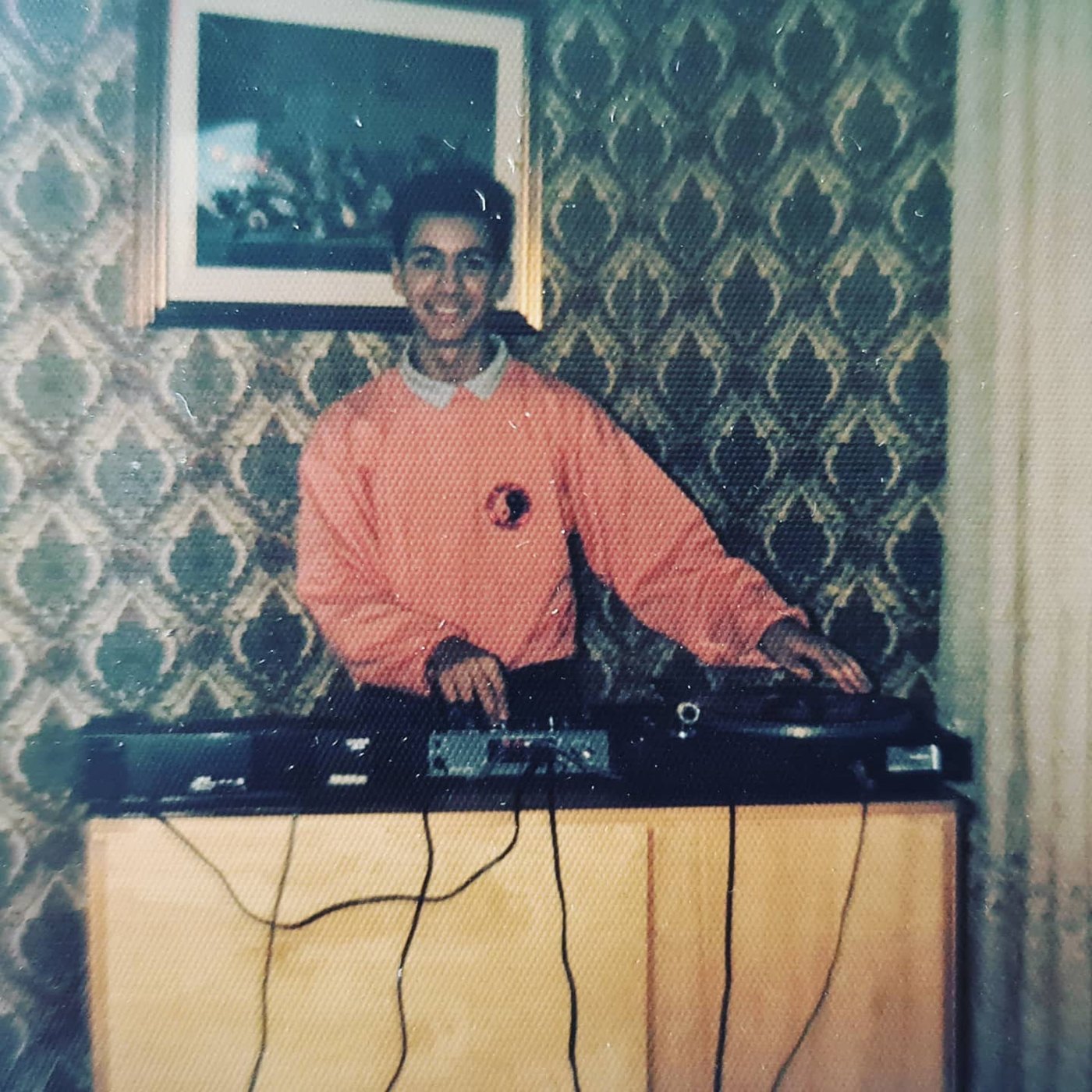
A computer and a radio switched on
I bought my first computer with my father: a Commodore VIC-20. Music and cables started out together, and they have never parted since.
After my diploma at the Istituto Tecnico Industriale Hertz, I happened to hear Anna Pettinelli on the radio announcing a course run by the Lazio Region, with a name that meant nothing to anyone: Midifonico. Electronics and music: a programme ahead of its time. About thirty places. I got in. At the end of the course they sent us out to companies in the industry, and I got RDS.
First steps in radio
At RDS I became what they called the all-rounder: studio direction, live shows, sound engineering, editing, commercials. Then head of post-production and of the commercials. In the early Nineties I was the one pushing the move from analogue to digital: Pro Tools, DAT tapes.
I also looked after the dance shows at RDS with Paolo Bolognesi. Among them was TOP TEN DANCE, which in 1995 won a Telegatto as best music chart. In the same years I started mixing Hit Mania Dance.
That's where I learned the job, and not on my own: Bolognesi, six years older than me, taught me work ethic and respect long before technique.
Building a radio station from scratch
In February I got a call from Fabrizio Tamburini: Italia Radio, the third station of the Gruppo Espresso, had to become something for a young audience. Three of us moved over: me, Paolo Bolognesi and Davide Fara.
The project really started from nothing. There weren't even any studios: we designed and fitted them out ourselves. And there was no name: for months the station was on air as a test while ideas like Lemon Radio and Radio Londra were thrown out. Then came m2o, musica allo stato puro, and the moment we heard it the discussion was over.
The first compilation came out with the launch, sold in record shops at an aggressive price for the time. It sold out quickly. That's when we all understood it was working.
The m2o years
For seventeen years I was, in practice, the artistic face of the station: I invented formats, set the musical direction, brought artists in, hosted the peak afternoon slots, and was the headliner at the brand's live events.
And I mixed. More than 90 compilations in all, 53 for m2o alone: the forty numbered volumes, the four DualDiscs (a two-sided disc, CD on one side and DVD on the other, with a football match between the station's cast and a car race on it) and the nine Xperience releases. At some point the CD stopped coming out on its own and was paired with Pianeta m2o: from then on it was sold at newsstands, a whole different league from record shops. The wall of covers is here.
Outside radio there was television too: a show of mixed videos for All Music. In those years beat-matched videos looked like the future. It was the first place where my job met visual language.
The producer
I started out as Double Dare, with I Believe and We Belong, together with Paolo Bolognesi, in the early days of Italo dance. I have never stopped since: my own singles, remixes for others, and the tracks created for compilations and never released anywhere else.
In the 2000s came the remixes that took me beyond Italy: Leave The World Behind by Steve Angello, Sebastian Ingrosso, Axwell & Laidback Luke feat. Deborah Cox, and Scared of Me by Fedde Le Grand feat. Mitch Crown. In 2017 came Folegandros with Federico Scavo, one of the tracks people know me for. Then La Trompeta with Paul Jockey, Tiki Taka with Andrea Gulisano, La Flauta Magica with Gabry Sangineto, Barranquilla, Super Paradise. Every release, year by year, is here.
Anima Libera is a case of its own: it isn't my track. I used it to open a compilation, and it became the song people ask me for wherever I play in Italy. To make my own version I had to chase the rights holders' permission for years. It came through only recently.
The DJ
Spazio 900 in Rome, Baia Imperiale in Gabicce Mare, Privilege in Ibiza, Samsara and Praja in Gallipoli, Aquafan in Riccione, Altromondo Studios in Rimini, Fabrique in Milan, Tito’s in Palma de Mallorca, and countless other places around Italy and beyond, still today.
I don't have a fixed answer about what to play: it depends on the place, on the age of the crowd in front of you, on the moment. The goal is always the same, and it isn't showing off what I can do: it's making sure the people who came have a good time.
Fridays, and everything else
Since November 2019, every Friday brings Crossover: the new records of the week, picked one by one and mixed. It's the same job as ever, choosing music, done with today's tools instead of radio's. Listen to every episode and see the tracklists.
Alongside it there's my creative agency, volumevisivo: visual content made with AI, for labels, artists, DJs and creators. It isn't a change of job: it's the same double nature as when I bought the VIC-20 and made my own covers. History repeats itself with every new tool: when the computer arrived, people who played live said making music on a computer was cheating.